
Hormone Biology Research: 7 Essential Insights Into Human Sex Development (2026)

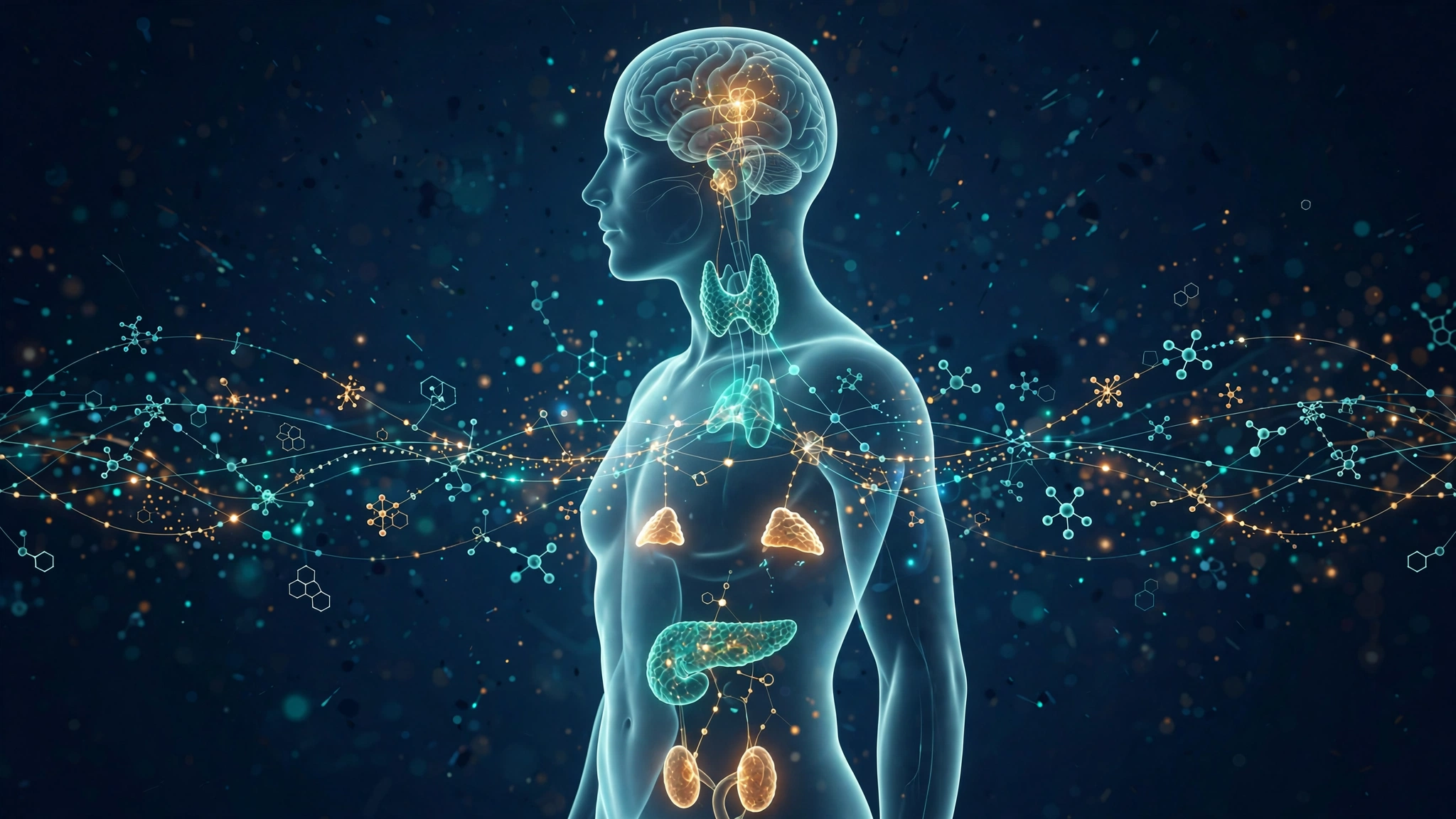
By BT Staff | October 26, 2026
What does hormone biology research reveal about human sex development? It shows that development depends on an interacting network of chromosomes, genes, gonads, hormone synthesis, receptors, and tissue responses, rather than on one hormone level or one genetic marker. Arboleda, Sandberg, and Vilain’s 2014 review in Nature Reviews Endocrinology describes this multilayered developmental process, while published genetic studies demonstrate why different biological pathways can produce varied sex characteristics. The evidence supports careful scientific description, not simplistic assumptions about an individual’s identity or health.
October 26 is Intersex Awareness Day, an opportunity to recognize intersex people and improve understanding of variations in sex characteristics. This supporting research overview focuses on the underlying biology, scientific methods, and limits of current evidence. It is distinct from today’s bodytechpharma.ca flagship discussion of laboratory quality: this article addresses what researchers study, not a laboratory audit or a product claim.
Table of contents
- Seven insights
- Genes and gonadal development
- How hormones signal
- Examples of biological variation
- What published studies actually found
- Interpreting tests and uncertainty
- Ethics and respectful language
- Research directions
- Frequently asked questions
- References
Seven insights from hormone biology research
In hormone biology research, the seven themes below summarize established developmental concepts and methodological lessons. They are educational descriptions, not a diagnostic checklist or instructions to alter hormones. Much of the literature uses differences of sex development (DSD) or disorders of sex development in clinical titles; individuals vary in the language they prefer for themselves.
| Insight | What evidence indicates | Common oversimplification to avoid |
|---|---|---|
| 1. Development is coordinated | Multiple gene networks and tissue signals interact | One gene dictates every characteristic |
| 2. Chromosomes are one layer | Chromosomal patterns contribute but do not describe all outcomes | A chromosome result explains everything |
| 3. Hormones need receptors | Exposure, timing, receptor function, and tissue context matter | One blood value defines development |
| 4. Different pathways yield variation | Steroid synthesis, conversion, and receptor signalling can differ | All variations have one cause |
| 5. Timing matters | Embryonic processes differ from puberty or adulthood | Today’s measurement reconstructs fetal biology |
| 6. Genetic tests have limits | Panels detect defined classes of variants | Negative testing excludes all causes |
| 7. Respect belongs in science | Research questions affect real people and communities | Anatomy defines a person’s identity or worth |
Research can describe mechanisms accurately while also recognizing that biological traits, personal identity, and lived experience are not interchangeable. This combination strengthens hormone biology research because it improves terminology, study design, communication, and interpretation.
The goal of hormone biology research is an explanation proportionate to the evidence, not a single universal label.
Insight 1: biology works as a network
In hormone biology research, the early embryonic gonadal precursor can develop along different pathways. Gene regulatory networks help determine which cellular programs become active, and the resulting tissues produce signals that affect subsequent development. SRY and SOX9 are important in commonly studied testicular pathways, while genes including WNT4 and RSPO1 are relevant to ovarian developmental pathways.
Within hormone biology research, these are not isolated switches operating without feedback. Genes influence other genes, cells respond to surrounding tissues, and timing can change the result. Arboleda and colleagues’ 2014 review emphasizes why the genetics of sex determination cannot be reduced to a one-marker story.
For hormone biology research, network thinking also explains why two individuals may have differences in development involving distinct molecular causes. Finding one relevant variant does not necessarily explain every feature. Researchers evaluate whether the variant plausibly affects a pathway and whether independent evidence supports the interpretation.
Such network models make hormone biology research more useful for testing specific hypotheses.
Insight 2: chromosomes provide context, not a complete biography
In hormone biology research, sex chromosomes contain genes relevant to development, but chromosomal makeup is only one biological dimension. Patterns such as 46,XX, 46,XY, and certain sex chromosome variations may be relevant in clinical or genetic research. The effects depend on what genes are present, how they function, and the downstream developmental response.
The shorthand of “XX versus XY” may be convenient for introductory teaching, yet it cannot encompass the diversity of karyotypes, gene variants, or tissue responses observed in clinical genetics. Chromosome-based categories are useful when tied to a precise research question; they are incomplete as sweeping descriptions of a person.
An important principle of hormone biology research is to avoid claiming more than a test measures. A karyotype describes chromosomal observations in the sampled cells under a particular method. It does not directly quantify receptor signalling, reproductive anatomy, personal identity, or all possible mosaic cell populations.
This separation of measurement and interpretation is fundamental to hormone biology research.
Insight 3: signal production and signal response differ
Within hormone biology research, hormones are chemical signals. Their biological effects depend on synthesis, transport, local conversion, receptor availability, and cellular response. A tissue can respond differently to the same circulating signal because receptor function and local enzyme activity are not identical across contexts.
Testosterone can be converted locally into dihydrotestosterone by 5-alpha-reductase enzymes. Androgen receptors mediate many androgen effects through intracellular signalling. Anti-Müllerian hormone has a different developmental role, participating in the regression of Müllerian ducts in typical fetal testicular development.
This illustrates a central finding of hormone biology research: concentration and effect are not synonyms. A measured circulating concentration is informative within its intended context but does not reveal every local developmental process. Researchers distinguish ligand production, receptor activation, target-tissue response, and timing rather than treating them as one variable.
Receptor function remains a key subject for hormone biology research precisely because tissue responses differ.
Insight 4: several distinct mechanisms can affect sex characteristics
In hormone biology research, variations in sex development encompass multiple mechanisms. Examples described in endocrine and genetics literature include changes in steroidogenic enzymes, androgen-receptor function, gonadal-development genes, and sex-chromosome complement. The mechanisms should not be collapsed into a single category of “hormone imbalance.”
For instance, 5-alpha-reductase type 2 deficiency involves altered conversion of testosterone to dihydrotestosterone. Complete or partial androgen insensitivity involves different degrees of tissue response to androgen signalling. Some forms of congenital adrenal hyperplasia involve adrenal steroid-synthesis pathways. These are distinct biological explanations, not interchangeable labels.
Good hormone biology research asks which mechanism is under examination and whether an observation supports that mechanism. It also avoids assuming that everyone with a shared clinical label has the same genetic variation, experience, appearance, or health priorities.
Mechanism-specific descriptions help hormone biology research avoid misleading generalizations.
Insight 5: developmental timing changes the question
Hormone biology research examines hormone-sensitive processes that occur at different developmental stages. Embryonic gonadal differentiation, fetal internal and external development, childhood growth, puberty, and adult endocrine regulation are not a single uninterrupted measurement. A laboratory result obtained today cannot serve as a direct record of every earlier developmental exposure.
In hormone biology research, timing also matters to scientific study designs. Studies of a cellular model or animal developmental stage can identify mechanisms, but those findings may not map straightforwardly onto a person’s lifetime. Human observational work has additional challenges, including varied genetic backgrounds, clinical selection, and incomplete longitudinal records.
Responsible hormone biology research specifies the stage studied and whether the evidence concerns fetal biology, postnatal endocrine function, or later outcomes. Such precision helps readers understand how far the conclusions can reasonably travel.
Longitudinal observations are one important frontier in hormone biology research, though they can be difficult to obtain.
Insight 6: sequencing expands knowledge but does not solve every case
Modern genomic approaches can evaluate many relevant genes and types of variants more efficiently than one-gene-at-a-time testing. However, detecting a DNA change and explaining a phenotype are different tasks. Variants may be uncertain, genes may be incompletely understood, and some changes lie outside the region or variant class targeted by a particular assay.
Targeted panels, copy-number analysis, exome sequencing, and whole-genome approaches address overlapping but different questions. Each has coverage, sensitivity, interpretive, and validation limitations. The appropriate conclusions depend on laboratory methods and the evidence connecting a variant to biological function.
Hormone biology research improves when studies report both solved and unsolved cases. A negative result is not proof that a person’s observed variation lacks a biological basis. It may reflect the present limits of knowledge or of the testing approach.
Transparent unresolved findings keep hormone biology research open to later discoveries.
Insight 7: human context changes what counts as a useful outcome
An investigation can be technically sophisticated and still overlook what matters to participants. People whose sex characteristics vary may encounter stigma, unwanted disclosure, or inaccurate assumptions. Scientific communication should recognize individual autonomy, privacy, and the difference between describing an anatomical finding and assigning an identity.
Intersex Awareness Day also invites scrutiny of how research communities select questions and report outcomes. Studies that assess molecular diagnoses may be useful, but participants can value understandable explanations, respectful communication, psychosocial support, and control over their information. No genetic result can dictate a person’s preferences.
Ethically grounded hormone biology research therefore includes transparent consent, careful privacy practices, meaningful engagement with affected communities, and modest claims. This is a complement to rigorous biology, not a departure from it.
Community engagement can help hormone biology research ask questions that participants consider meaningful.
Genes and gonadal development
Gonadal development illustrates why hormone biology research is interdisciplinary. Embryology describes changes in tissue structure; genetics explores regulatory pathways; endocrinology examines chemical signals; and cell biology investigates how individual cells respond to their environment. None alone fully describes the observed diversity.
The precursor gonad initially possesses developmental potential that can be directed along different paths. Certain transcription factors influence supporting-cell differentiation. Supporting cells, in turn, affect other gonadal cells and local endocrine activity. The result is a sequence of interactions rather than a binary instruction encoded in a single molecule.
Researchers often study genes such as SRY, SOX9, NR5A1, WT1, MAP3K1, WNT4, and RSPO1 because variants or changes in regulation can help illuminate developmental mechanisms. Their specific roles vary. It would be inaccurate to present this gene list as a universal diagnostic panel or to suggest that each gene change yields one predictable phenotype.
Arboleda, Sandberg, and Vilain’s review of literature from 1991 through 2014 integrated genetic, endocrine, and developmental research. Its scope illustrates a useful strength of hormone biology research: comparing evidence from several disciplines can clarify plausible pathways while keeping uncertainty visible.
Genes are not destiny
A pathogenic genetic variant can be important evidence of biological mechanism. Yet gene expression, timing, tissue specificity, and interactions with other pathways help determine the resulting phenotype. Even among people with variants affecting the same biological function, clinical features may vary.
Scientists also distinguish association from causation. A newly found rare variant is a candidate for further evaluation, not automatically a confirmed cause. Family segregation evidence, functional data, population frequency, and consistency with a well-established mechanism can all influence interpretation.
For hormone biology research, this means scientific conclusions should identify both the genetic evidence and the assumptions used to interpret it. Overstating the predictive power of sequencing can mislead readers even when the underlying DNA measurement is technically correct.
Replicable interpretation is as important to hormone biology research as accurate sequencing.
How hormones signal
An endocrine pathway often begins with a tissue producing a signalling molecule. The molecule can circulate and be metabolized, while target cells respond according to the relevant receptor and internal regulatory machinery. Some effects occur locally, so blood measurements capture only part of the biology.
Androgen signalling is a useful example. A circulating measurement does not directly reveal every cell’s exposure or response. Conversion of testosterone to dihydrotestosterone varies by tissue, while androgen-receptor function determines whether and how a signal can produce downstream transcriptional changes.
Other signalling pathways influence development through different mechanisms. Anti-Müllerian hormone, for example, has a role in the development of internal reproductive structures. Hormone biology research becomes more precise when it states which hormone, which tissue, which period, and which biological endpoint were actually examined.
Why one reading cannot reconstruct development
A current laboratory measurement represents a specific analyte, sample, method, and time. It cannot reconstruct the full history of fetal hormone exposure or local receptor activity. Nor should a single value be used to make unsupported claims about someone’s identity, capabilities, or character.
Scientists rely on converging evidence: developmental history, appropriate genetic findings, relevant endocrine observations, and established biological mechanisms. The weight of each depends on the research question. Repeated measurements and longitudinal data may be useful in some studies, but a universal interpretation rule is inappropriate.
This careful approach defines responsible hormone biology research. A result becomes meaningful through context, not through an absolute-sounding label attached to the number.
Examples of biological variation
The examples below illustrate mechanisms reported in peer-reviewed endocrine literature. They are not exhaustive, and the presence of any feature does not determine how a person identifies. An intersex person’s own terminology and experience deserve respect.
| Example | Biological pathway under study | Why the distinction matters |
|---|---|---|
| Androgen insensitivity | Androgen-receptor response | Hormone presence and tissue effect can differ. |
| 5-alpha-reductase type 2 deficiency | Local conversion of testosterone to dihydrotestosterone | Synthesis and conversion are distinct processes. |
| Certain congenital adrenal hyperplasia forms | Adrenal steroid biosynthesis | Enzyme pathways can alter steroid profiles. |
| Gonadal dysgenesis | Gonadal formation and gene regulation | Early tissue development can differ from later endocrine processes. |
| Sex chromosome variations | Chromosomal complement and gene dosage | Karyotype can add information but is not a complete phenotype. |
Language deserves the same precision as biology. Some people use “intersex” as a broad descriptive or community term. Clinical papers may use “DSD,” and not everyone embraces that acronym. Preferences can differ across individuals and conditions. Researchers should define terms rather than presume that one label universally fits.
For hormone biology research, this prevents the misleading impression that all people with variations in sex characteristics share the same anatomy, hormonal profile, medical history, or social identity. Variation is not a single condition with a single laboratory signature.
The difference between categories and mechanisms
A category can help a research team organize cases, but it does not itself explain an underlying mechanism. “46,XY DSD,” for example, describes a broad grouping and does not identify the precise gene, protein, developmental stage, or endocrine pathway involved.
Likewise, a label that references a hormone cannot automatically explain whether the cause involves production, metabolism, receptor signalling, or tissue differentiation. Mechanism-specific studies are necessary to test these possibilities rather than inferring them from a headline category.
Better hormone biology research states the phenotype or grouping used, the biological question, and the evidence supporting a mechanism. It also reports when several explanations remain plausible.
Clear group definitions improve comparability across hormone biology research cohorts.
What published studies actually found
Named studies provide a more reliable foundation than anonymous statistics. The following primary investigation and published consensus are useful for understanding both the possibilities and limitations of sex-development research. A small genetic pilot cannot establish prevalence in the general population; consensus estimates should not be confused with counts from a population-wide survey.
| Publication | Design and population | Verified findings | Limits |
|---|---|---|---|
| Arboleda, Lee, Sánchez and colleagues, Clinical Genetics (2013 issue; online 2012) | 14-person pilot using targeted sequencing of 35 genes | Genetic causes identified in 7 of 7 previously solved cases and 2 of 7 previously unsolved cases | Selected pilot cohort; not general-population sensitivity |
| Lee, Houk, Ahmed, Hughes and colleagues, Pediatrics (2006) | International clinical consensus, not a new cohort | Estimated genital anomalies at about 1 in 4,500 births | Estimate concerns a particular clinical presentation; not all intersex traits |
| Arboleda, Sandberg and Vilain, Nature Reviews Endocrinology (2014) | Review of literature covering 1991–2014 | Describes multiple genetic and endocrine pathways | Review, not an original prevalence or treatment-outcome trial |
The 14-person sequencing pilot
Valerie Arboleda and colleagues published “Targeted massively parallel sequencing provides comprehensive genetic diagnosis for patients with disorders of sex development” in Clinical Genetics. The work included a pilot group of 14 patients and a targeted design covering 35 sex-development genes. The journal issue is dated 2013, while the manuscript records an earlier online publication history.
The investigators reported identifying the existing molecular diagnosis in all seven of seven participants for whom a cause had already been determined. Among seven participants without a prior molecular diagnosis, the approach identified a genetic diagnosis in two. These are study-specific counts, not estimates that every modern test reaches the same performance.
For hormone biology research, the study offers an important illustration: broader sequencing can contribute new explanations, but unresolved cases remain. The 100% figure applies to seven already-characterized individuals in this pilot and must not be presented as general diagnostic accuracy in an unselected population.
The 2006 international consensus
An international consensus statement associated with Peter Lee, Christopher Houk, Faisal Ahmed, and Ieuan Hughes was published in Pediatrics in 2006. Related versions appeared in other journals. The consensus discusses complex multidisciplinary considerations and cites an estimate that genital anomalies occur in approximately one in 4,500 births.
That number is frequently misused as if it settled the prevalence of every intersex variation. It does not. Different studies and organizations define which traits are included in distinct ways, and ascertainment can vary by population, age, and healthcare setting. An estimate for genital presentations cannot be stretched into a universal count.
Sound hormone biology research labels prevalence estimates with their definitions and sources. It avoids selecting whichever number is rhetorically appealing, especially when communities and clinical services may be counting different sets of characteristics.
A 2014 synthesis of mechanisms
Arboleda, Sandberg, and Vilain published “DSDs: genetics, underlying pathologies and psychosexual differentiation” in Nature Reviews Endocrinology in 2014. Their review examined literature on relevant genes, endocrine mechanisms, and developmental outcomes. Its importance here is conceptual, not a newly recruited sample size.
The review places genetic and hormonal pathways in a broader developmental framework. It also illustrates how scientific understanding changes as sequencing and functional investigations improve. A literature review can synthesize pathways and debates, but it should not be described as though its authors directly tested thousands of new participants.
Together, these publications show how hormone biology research draws on small mechanistic studies, broader literature, and explicit clinical definitions. Each evidence type answers different questions and has different limits.
Their distinct designs remind readers that hormone biology research is stronger when its evidence types are clearly identified.
Interpreting tests and uncertainty
Scientific measurements must match the intended research question. A genetic test, hormone assay, tissue study, and developmental observation can each provide useful information without being interchangeable. Interpretation also depends on technical performance and on the population from which the observations came.
A sequencing panel may detect relevant coding variants but miss some structural or regulatory changes. A hormonal assay may be sensitive to timing, sample handling, the measurement platform, or interference. An imaging finding can describe anatomy without determining a molecular cause. A functional cell experiment may support mechanism without establishing what occurs in every person.
Hormone biology research is strongest when investigators explain these limitations alongside results. This is particularly important in uncommon conditions, where cohorts may be small, referral patterns selective, and follow-up outcomes difficult to compare.
What a negative result means
If investigators do not find a known variant, they have not demonstrated the absence of any biological difference. They may have excluded particular variants within the assay’s validated capabilities, but not mechanisms outside the test’s reach.
Likewise, a hormone value within a reference interval is not a universal statement about developmental pathways. Reference populations, biological timing, assay characteristics, and research context determine how a measurement can be interpreted. The purpose of reporting a reference interval is not to reduce a person to a single classification.
Good hormone biology research makes room for results that remain unresolved. Honest uncertainty can point to new studies of regulatory DNA, cell-specific signalling, mosaicism, or developmental trajectories rather than pressuring researchers to produce an unwarranted categorical answer.
What counts as stronger evidence?
Several lines of evidence may converge: a reproducible genetic observation, a plausible pathway, functional experimental data, carefully characterized phenotypes, and independent replication. Not every investigation can provide all these elements, and the contribution of each depends on the hypothesis.
In hormone biology research, peer review and publication do not guarantee that a finding is final. The strongest scientific approach allows conclusions to be revised when larger cohorts or better methods provide new evidence. Researchers should separate observations from interpretations and state what remains to be tested.
For hormone biology research, transparent uncertainty is an asset. It helps readers understand why basic science, clinical observation, and personal experience should inform discussions without being collapsed into a simplistic formula.
An explicit limitations section should be routine in hormone biology research reporting.
Ethics and respectful language
Intersex Awareness Day reminds us that hormone biology research is about people as well as biological knowledge. Intersex traits are not a rhetorical device, and an individual’s anatomy or genetic data should never be assumed from their appearance. Respectful communication starts by asking what terminology people prefer and by avoiding sensational descriptions of natural human variation.
Reports in hormone biology research recognize that older literature may employ language that affected people consider stigmatizing. Quoting a historical study title accurately does not mean adopting every historical framing as a current editorial preference. This article uses condition-specific descriptions where possible and recognizes the range of preferences around “intersex” and “DSD.”
Ethical hormone biology research considers privacy, consent, meaningful communication, participant involvement, and how findings could be misrepresented. Anonymity can be difficult to preserve in very rare conditions, particularly when detailed combinations of genetic and clinical features are published. Responsible teams plan confidentiality protections accordingly.
Biology does not prescribe identity
Researchers may describe chromosomes, gonadal structures, hormone pathways, or observed traits. Those observations do not confer authority to dictate someone’s gender identity, lived experience, dignity, or rights. Biological research and respect for individual self-description are entirely compatible.
The distinction also benefits scientific rigor. If a researcher conflates a molecular variable with an unrelated social or personal outcome, the resulting hypothesis may be poorly specified. Precise definitions make studies more reproducible and conversations more humane.
For hormone biology research, respectful language is therefore part of clarity, not an optional flourish. It tells readers which variable was measured and which claims remain outside the evidence.
Thoughtful terminology strengthens both communication and hormone biology research quality.
Research directions and open questions
New sequencing methods and cellular models continue to improve investigation of sex-development pathways. Studies increasingly examine regulatory regions, copy-number changes, gene networks, and how molecular findings correspond with varied phenotypes. Important questions remain about interpretation, long-term outcomes, and how best to reflect the priorities of affected people.
Research registries and collaborations can sometimes address the limitations of small local cohorts by standardizing definitions and combining observations. Yet larger datasets bring their own challenges: variable consent, inconsistent historical terminology, missing measurements, and differences in care systems. Transparent methods remain essential.
Hormone biology research could also benefit from more carefully studied functional assays that assess how specific variants influence cell behaviour. A DNA sequence provides a starting point; protein function and tissue-level consequences may require additional experiments. Results should be validated before claims grow broader than the data.
Seven questions for reading future studies
- Which developmental stage and biological pathway were investigated?
- How were participants recruited, and what definitions determined inclusion?
- What sample size and comparison groups were used?
- What exactly did the test measure, and what could it miss?
- Were proposed mechanisms confirmed through additional evidence?
- Did researchers distinguish observed findings from broader interpretations?
- How were privacy, language, and participant perspectives addressed?
These questions make hormone biology research more accessible to readers without giving medical instructions or pretending that every uncertainty has been resolved. A credible explanation welcomes careful scrutiny.
The supporting role of this overview
The central contribution of this article is an evidence-based explanation of mechanisms and interpretation. Its companion flagship topic on laboratory quality examines processes used to produce trustworthy measurements. The two questions complement each other without duplicating content: a carefully measured result is not the same as a complete biological explanation, and a plausible mechanism still requires sound measurements.
Ultimately, hormone biology research helps explain the complexity of human development. Its best findings become more useful when presented with precise definitions, real study details, respect for individuals, and appropriate limits on what the evidence can establish.
Frequently asked questions
What does hormone biology research say about sex development?
Hormone biology research shows that sex development involves interacting chromosomes, genes, gonadal pathways, hormones, receptors, and tissue responses. No single measurement fully describes these processes, and observed variation can involve distinct mechanisms.
Is being intersex the same as having one particular hormone level?
No. Intersex is a broad term relating to variations in sex characteristics. Hormone levels are only one possible dimension, and the term cannot be reduced to a threshold on a laboratory result.
Does a 46,XX or 46,XY result explain every sex characteristic?
No. Chromosomal complement offers important genetic context, but gene regulation, gonadal development, hormone synthesis, receptor activity, and tissue responses contribute to outcomes. Even a detailed karyotype does not measure all these processes.
Can genetic sequencing identify every cause of a variation in sex development?
No. Sequencing can help identify molecular causes, but results depend on genes and variant types covered, analytical limits, and current scientific knowledge. A 14-person pilot by Arboleda and colleagues resolved two of seven previously undiagnosed cases, illustrating both potential and limitations.
Why is October 26 recognized as Intersex Awareness Day?
October 26 is an annual observance highlighting intersex visibility, rights, dignity, and understanding. Scientific education can support that purpose when it uses accurate terminology, avoids stereotypes, and respects people’s experiences and autonomy.
References
- Arboleda VA, Sandberg DE, Vilain E. “DSDs: genetics, underlying pathologies and psychosexual differentiation.” Nature Reviews Endocrinology. 2014;10(10):603–615. Review of literature from 1991 through 2014. PubMed PMID 25091731.
- Arboleda VA, Lee H, Sánchez FJ, et al. “Targeted massively parallel sequencing provides comprehensive genetic diagnosis for patients with disorders of sex development.” Clinical Genetics. 2013;83(1):35–43 (online 2012). 14 participants; 35 genes; 7/7 previously known diagnoses recognized; 2/7 previously unknown diagnoses identified. DOI: 10.1111/j.1399-0004.2012.01879.x. Open full text.
- Lee PA, Houk CP, Ahmed SF, Hughes IA, et al. “Consensus statement on management of intersex disorders.” Pediatrics. 2006;118(2):e488–e500. A consensus document; a related edition estimates genital anomalies in approximately 1 in 4,500 births. PubMed PMID 16882788 and related full-text consensus.
- Bashamboo A, McElreavey K. “Human sex-determination and disorders of sex-development (DSD).” Seminars in Cell & Developmental Biology. 2015;45:77–83. Review of human sex-determination genetics. PubMed PMID 26526145.
- Bashamboo A, Eozenou C, Rojo S, McElreavey K. “Anomalies in human sex determination provide unique insights into the complex genetic interactions of early gonad development.” Clinical Genetics. 2017. Review of emerging genetic findings and methods. PubMed PMID 27893151.
- U.S. Department of State. “On Intersex Awareness Day.” October 26, 2024. Official observance statement emphasizing dignity and non-discrimination. Archived statement.
For laboratory research use only. Not for human consumption.