
Laboratory Reproducibility in Health Research: Methods, Controls and Evidence

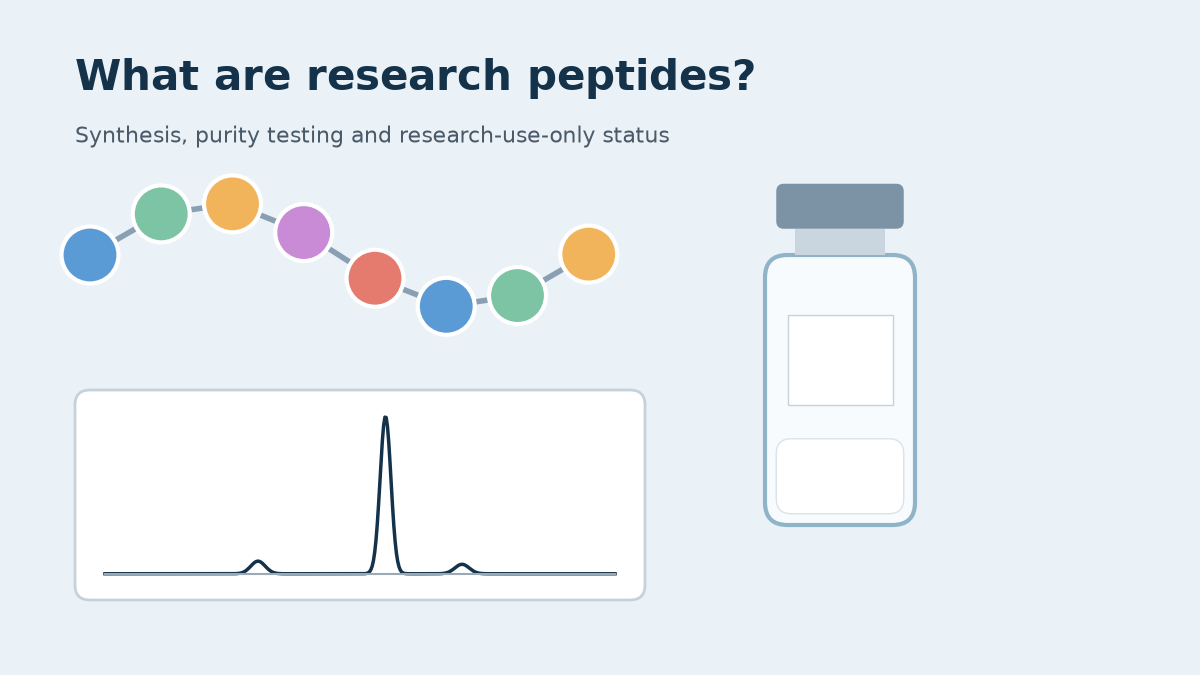
Laboratory reproducibility means that research methods, measurements and analyses are transparent enough to be checked and, where appropriate, independently repeated. This guide explains the essential quality controls behind trustworthy health-science findings and why a promising laboratory signal is not proof of a clinical benefit.
Why laboratory reproducibility matters
Research findings become useful when independent investigators can reproduce them under comparable conditions. A compelling headline or a visually striking figure cannot substitute for a clear account of the methods. Reproducibility includes the ability to repeat an analysis from the same data and to test whether a result holds in a new experiment. These are related but distinct questions. For health science, the consequences of weak replication can extend to wasted resources, misleading clinical expectations and avoidable confusion among readers. A responsible evidence review therefore begins with study design, materials, measurements and transparent reporting rather than with the size of an apparent effect.
Defining the research question
Every rigorous project begins with a question that identifies the population or material, intervention or exposure, comparison and outcome. Vague aims allow investigators to change the interpretation after seeing results. A clear question also determines whether cell cultures, animal models, observational cohorts or clinical trials are suitable. Each design can answer different questions, and none is universally superior. Researchers should define primary outcomes before collecting data and distinguish exploratory observations from planned tests. Readers can then determine whether the study answered its stated question or only generated a new hypothesis that needs independent evaluation.
Protocols before experiments
A written protocol records the sequence of procedures, inclusion criteria, measurement methods and decision rules. Pre-registration is particularly valuable for confirmatory studies because it helps distinguish planned analyses from later exploration. Protocol deviations sometimes occur for legitimate reasons, but they should be documented rather than concealed. Laboratory teams also benefit from version-controlled standard operating procedures. When procedures change, the timing and rationale matter. A method described only as performed according to standard practice leaves too much ambiguity for another group to reproduce it. Transparent protocols make research more auditable and reduce accidental variation between technicians or study sites.
Sample provenance and identity
Researchers must know what material was actually studied. Biological samples, cell lines and reference compounds can be mislabeled, contaminated or degraded during transport and storage. Documentation should include supplier, batch, identifiers, collection conditions and relevant authentication procedures. The level of verification depends on the material and the scientific question. A certificate alone is not sufficient if the chain of custody is unclear. For cell lines, identity and contamination checks may be essential. For chemical reference materials, analytical confirmation may be appropriate. Without provenance, a precise instrument reading can still describe the wrong substance, undermining the validity of every downstream conclusion.
Analytical identity and purity
A material’s stated name and nominal concentration do not prove its chemical identity or purity. Analytical methods such as chromatography and mass spectrometry can address different properties, depending on validation and calibration. A chromatographic purity percentage is not equivalent to a complete safety assessment. It may not identify every impurity, residual solvent or microbial concern. Researchers should specify which method was used, the detection limits and how samples were prepared. Batch-specific documentation is more informative than a generic marketing claim. Interpreting analytical evidence requires knowing what was measured and what the assay could have missed.
Calibration and reference standards
Instruments produce reliable measurements only when they are used within their validated ranges and calibrated appropriately. Reference standards provide a basis for comparing results, but their own identity, stability and traceability matter. Researchers should document calibration schedules, instrument settings and quality-control failures. A precise-looking numerical result can be inaccurate if the measurement system is biased. Routine blanks, controls and replicates can help identify drift or contamination. Independent verification is particularly valuable when small differences are central to the conclusion. Good reporting includes uncertainty and units rather than implying that every digit displayed by an instrument is scientifically meaningful.
Blinding and randomization
Randomization helps distribute measured and unmeasured factors between comparison groups, while blinding can reduce expectation-related bias in measurement and interpretation. These practices are relevant beyond clinical trials; they can also strengthen animal experiments and laboratory scoring. Researchers should explain how allocation was generated and who knew group assignments. Merely stating that a study was randomized does not reveal whether the process was implemented correctly. In some settings complete blinding is impossible, but objective measurement and independent analysis may still reduce bias. Transparent reporting lets readers judge the remaining limitations instead of assuming that a design label guarantees reliability.
Controls and comparators
A meaningful comparison helps distinguish an intervention effect from background change, handling artifacts or natural variation. Negative controls, positive controls and vehicle controls serve different purposes. The correct selection depends on the experiment. An untreated group may not control for the effects of a solvent or an invasive procedure. Similarly, a historical comparison can differ from a contemporary group in important ways. Researchers should justify why each comparator is appropriate and describe how it was handled. A dramatic difference between groups is less persuasive when the comparison is poorly matched. Well-designed controls often determine whether a laboratory finding can be interpreted at all.
Biological and technical replicates
Technical replicates assess variation in a measurement process, while biological replicates represent independently sampled biological units. Treating repeated measurements of one sample as independent biological observations can exaggerate precision. Researchers should state the true experimental unit and the number of independent samples. Repeating an assay three times on the same specimen is not equivalent to testing three independent participants or animals. Hierarchical data may require statistical methods that account for clustering. Readers should inspect how replication was counted before accepting a reported confidence interval. The distinction is especially important in studies with small sample sizes and many repeated instrument readings.
Statistical power and uncertainty
Sample-size planning should consider the effect of interest, expected variability and acceptable error rates. A study can be too small to distinguish a meaningful difference from noise, while very large samples can make trivial differences statistically significant. Confidence intervals help communicate the range of effects compatible with the data under a model. Researchers should avoid treating a nonsignificant result as proof that no effect exists. Multiple testing can also increase false-positive findings when many outcomes are examined without adjustment. Statistical methods should match the study design and be described in enough detail for independent review. Interpretation should prioritize effect size, uncertainty and practical relevance.
Missing data and exclusions
Missing observations can change conclusions when the reasons for missingness differ between groups. Researchers should report how many samples were collected, excluded and analyzed, along with the reasons. Excluding an inconvenient result after inspecting the data can introduce bias. Predefined quality-control criteria are more defensible than undocumented decisions. Statistical approaches to missing data rely on assumptions that should be stated and examined. A flow diagram or transparent accounting of samples can reveal whether the final dataset represents the intended population. Readers should be cautious when a paper reports only successful experiments without describing failed runs or incomplete observations.
Data management and traceability
Raw data, processed datasets and final figures should be linked through a documented analysis workflow. File names, timestamps, version control and access permissions help preserve that chain. Researchers need to distinguish legitimate corrections from unrecorded alterations. Electronic laboratory notebooks and structured metadata can reduce ambiguity, but only if entries are maintained consistently. Sensitive patient information requires privacy safeguards and appropriate access controls. Open science does not mean releasing identifiable health records. Instead, investigators can share de-identified or synthetic data, code and sufficient methodological detail where ethically and legally appropriate. Traceability allows another researcher to understand how a conclusion emerged from the original observations.
Software and computational reproducibility
Analysis scripts, software versions, package dependencies and random seeds can affect computational results. A figure generated by a proprietary workflow may be difficult to reproduce unless the processing steps are disclosed. Researchers should archive code and describe preprocessing, normalization and model selection. Automated tools can make analyses faster but can also replicate errors at scale. Validation against known examples and independent code review are useful safeguards. Artificial intelligence systems require particular attention to training data, leakage and external validation. A model that performs well on the dataset used to develop it may fail in a new laboratory or patient population.
Measurement validity
A laboratory assay may measure a convenient signal that is only indirectly related to the biological outcome of interest. Researchers should establish whether the signal is specific, sensitive and stable under the experimental conditions. Changes in a biomarker do not automatically translate into improved symptoms, survival or function. Construct validity asks whether the method captures the concept it claims to measure. Clinical validity asks whether a result relates reliably to a health state or outcome. Analytical validity addresses measurement performance. These layers of evidence should not be collapsed into one claim. A promising biomarker can remain scientifically interesting without being ready for routine clinical use.
External validity and generalization
A controlled experiment may establish an effect in one setting without showing that it applies elsewhere. Cell culture conditions, animal species, age, sex, disease status and environmental factors can all influence results. Researchers should specify the boundaries of their conclusions. A finding in a particular mouse model cannot establish human efficacy or safety. Likewise, a trial in a narrowly selected adult group may not generalize to children or pregnant people. Replication across laboratories and populations strengthens confidence. Readers should ask who or what was studied and whether the proposed application matches that population. Generalization requires evidence, not just a plausible mechanism.
Dose, exposure and context
Experimental exposure must be described precisely, including concentration, duration, route and relevant formulation characteristics. Two studies using the same named compound may not be comparable if these conditions differ. Dose-response relationships can be nonlinear, and a result at one concentration does not establish benefits at higher levels. In vitro concentrations may not correspond to achievable or safe human exposure. Researchers should distinguish nominal dose from measured exposure when possible. A mechanistic signal is not a dosing recommendation. For investigational substances, safety and efficacy require appropriately regulated clinical research rather than translation from a laboratory protocol to personal use.
Adverse events and negative findings
Scientific reports are more informative when they describe adverse effects, null results and unexpected outcomes. Selective publication of positive experiments can distort the apparent strength of evidence. Researchers should define adverse events and report how they were monitored. In laboratory studies, toxicity or cell death may complicate the interpretation of a desired molecular change. Clinical studies must examine harms alongside possible benefits. A small trial without observed serious events cannot prove that a product is safe for widespread use. Systematic reviews are also vulnerable when underlying studies omit unfavorable results. Transparency about limitations protects both scientific progress and public understanding.
Replication across independent teams
Independent replication tests whether a result survives changes in investigators, equipment and setting. Exact procedural replication can isolate technical differences, while conceptual replication examines whether the underlying phenomenon appears using another method. Failure to reproduce a result does not always establish fraud or invalidate an entire field; differences in materials, measurement and context may explain discrepancies. Researchers should investigate those differences systematically. Multi-centre studies can strengthen evidence when protocols and quality controls are coordinated. The scientific value lies in learning which findings are robust and under what conditions. Confidence should grow through converging evidence rather than repetition of the same claim by one laboratory.
Publication and peer review
Peer review can identify weaknesses, but publication in a journal does not guarantee that every result is correct. Readers should examine methods, data availability, conflicts of interest and subsequent corrections. Preprints can share findings rapidly, yet they may not have undergone external review. Editorial decisions vary across journals, and citation counts are not direct measures of reliability. Researchers should distinguish original studies from reviews, opinion pieces and marketing materials. Retractions and corrections are part of the scientific record and should be checked when relying on influential claims. A credible evidence summary explains the quality and limitations of sources rather than using publication status as a substitute for appraisal.
Research ethics and participant protection
Studies involving people require ethical oversight, informed consent and appropriate protection of privacy. The level of risk must be justified by the research question and potential value. Investigational interventions require safeguards that are different from those for routine observational research. Vulnerable populations may need additional protections. Animal research also requires ethical review and attention to replacement, reduction and refinement where applicable. Researchers should report approvals and relevant registrations without suggesting that ethical approval proves effectiveness. Scientific rigor and participant welfare are complementary obligations. A study that produces detailed data through inappropriate risk cannot be defended solely by the novelty of its findings.
Conflict of interest and funding
Funding can support important research, but financial and professional interests should be disclosed so readers can assess possible sources of bias. Conflicts do not automatically invalidate results, and the absence of a declared conflict does not guarantee independence. Study design, access to raw data and publication rights remain important. Researchers should explain the sponsor’s role in analysis and reporting. Commercial product claims deserve special scrutiny when they rely on unpublished internal testing. Independent replication and transparent methods can reduce uncertainty. A trustworthy evidence review evaluates the work itself while recognizing that incentives may influence which questions are asked and which results receive attention.
Systematic reviews and evidence synthesis
A systematic review uses explicit search, selection and appraisal methods to summarize multiple studies. Meta-analysis can combine numerical results when designs and outcomes are sufficiently comparable. Pooling poor-quality or incompatible studies does not create high-quality evidence automatically. Reviewers should assess heterogeneity, publication bias and risk of bias. A large number of small studies can still leave substantial uncertainty. Living reviews may be useful in fast-changing research areas, but updates require consistent methods. Readers should distinguish a systematic review from a narrative overview that selects examples without a predefined process. Strong synthesis clarifies where evidence converges and where better primary studies are needed.
Clinical translation and regulatory evidence
Moving from a laboratory observation to an approved medical treatment requires several stages of research. Preclinical work may characterize mechanisms and identify hazards, while clinical trials evaluate safety and efficacy in people under regulated conditions. Regulators assess manufacturing quality and evidence for specific indications. Product availability online is not evidence of authorization for human use. A substance labeled for research use only should not be represented as a clinical therapy. Researchers must avoid promising that a cellular pathway finding will become a treatment. Responsible translation describes uncertainty, the populations studied and the work still required before clinical recommendations are justified.
Reporting checklists and transparency
Established reporting guidelines can help investigators provide the information readers need to evaluate studies. CONSORT addresses randomized trials, STROBE covers observational research and PRISMA supports systematic reviews. Laboratory-specific standards may also be relevant. A checklist does not replace good design, but it can reduce omissions about sampling, outcomes and analysis. Researchers should use the guideline appropriate to their study rather than attach one indiscriminately. Protocols, data dictionaries and methods supplements can make reports more complete. Transparent reporting improves the ability to replicate findings and identify limitations. It also helps editors, reviewers and readers distinguish a well-supported result from an attractive but underspecified claim.
Practical checklist for evidence readers
Before accepting a health-science claim, identify the study type, actual experimental unit, sample size, controls and primary outcome. Look for material authentication, analytical validation, randomization where feasible and a clear description of exclusions. Ask whether the effect was replicated independently and whether uncertainty is reported. Check that the outcome is clinically meaningful rather than merely a surrogate marker. Review conflicts of interest and whether the finding has been tested in the population to which it is being applied. This approach does not require rejecting every early study. It places promising findings in context and prevents premature conclusions about safety, efficacy or commercial value.
Conclusion: build confidence through methods
Reliable health science is built from transparent questions, authenticated materials, appropriate controls and analyses that others can inspect. Reproducibility is not a decorative feature added after publication; it begins when an experiment is designed. Independent replication, careful reporting of adverse effects and honest interpretation of uncertainty help distinguish durable knowledge from isolated signals. Laboratories, publishers and readers share responsibility for improving the evidence ecosystem. For investigational compounds and research materials, analytical identity and methodological quality are essential, but neither establishes suitability for human use. The strongest conclusion is one that matches the evidence actually collected and remains open to correction as new studies emerge.
Frequently asked questions
What is the difference between reproducibility and replication?
Reproducibility commonly concerns obtaining results from the same data and methods, while replication tests findings in a new study.
Does a certificate of analysis prove clinical safety?
No. Analytical identity and purity testing cannot establish human safety or efficacy.
Why are biological replicates important?
They represent independent biological observations rather than repeated readings of one specimen.
Can an animal study establish a human treatment?
No. Human safety and efficacy require appropriately designed clinical research.
What should readers check first in a laboratory paper?
Review the question, controls, sample provenance, methods, outcome definitions, uncertainty and independent validation.
Research resources
EQUATOR Network reporting guidelines; NC3Rs research principles; Nature reporting standards.
For laboratory research use only. Not for human consumption.