
Food Safety and Nutrition Research: Evidence for Healthier Kitchens

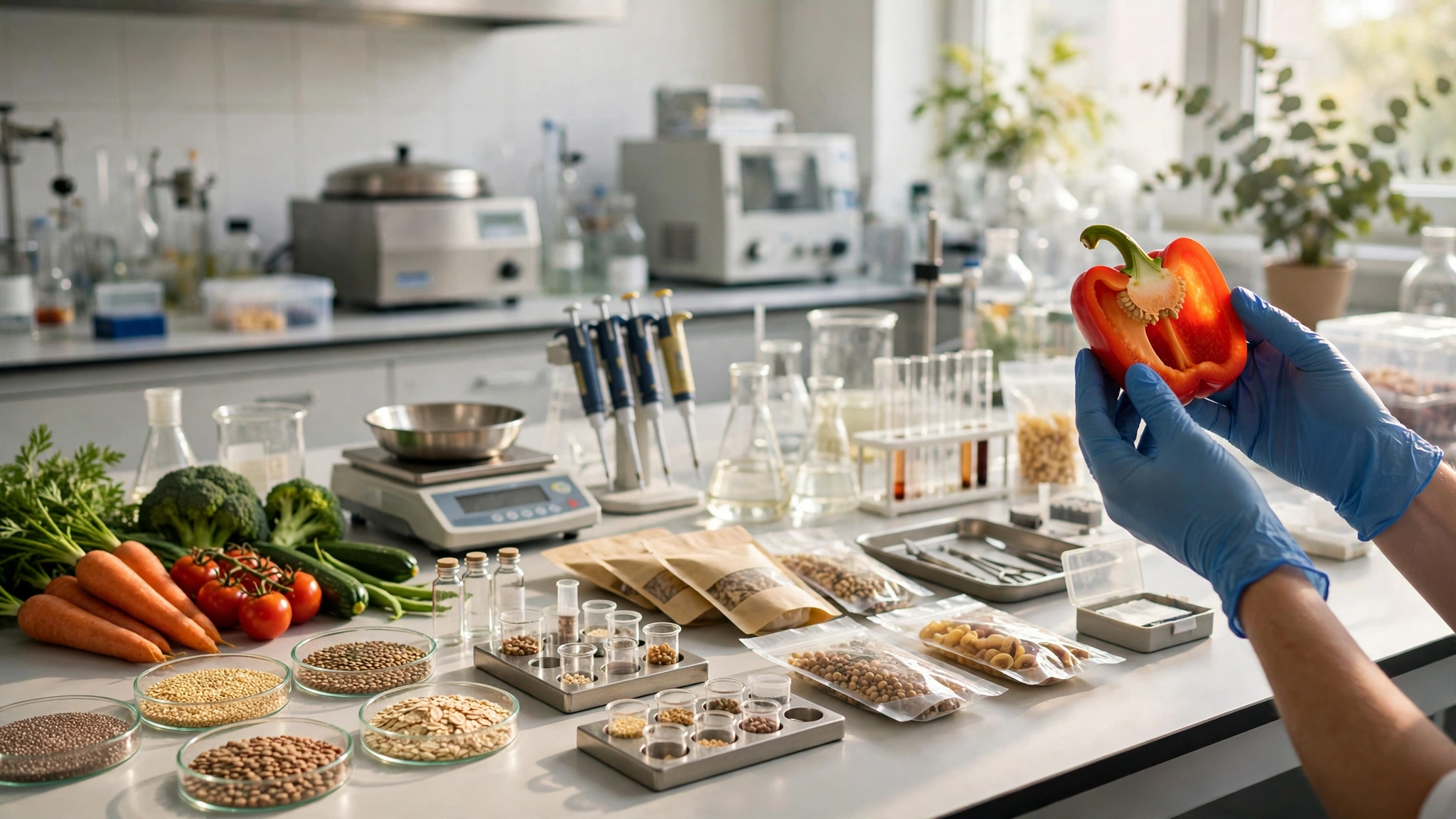
Food safety and nutrition research connects the science of foodborne hazards with the work of chefs, food handlers and public-health professionals. For International Chefs Day on October 20, this evidence review examines safe preparation, nutritional quality and research reliability.
Food safety is a research discipline
World Chefs Day on October 20 offers a useful occasion to examine the science behind preparing food that is both nutritious and safe. Food safety is not simply a matter of whether ingredients look fresh. Microbial hazards, allergens, chemical contaminants, storage conditions and handling practices can all affect risk. Researchers distinguish a hazard from the probability and severity of actual harm. The World Health Organization organizes basic prevention around cleanliness, separation of raw and cooked ingredients, thorough cooking, safe temperatures and safe water. Those principles apply in professional kitchens and homes, although specific procedures depend on the food and setting. This review connects food-safety evidence with nutrition research and explains how laboratory testing, outbreak investigations and intervention studies should be interpreted.
Foodborne hazards and exposure pathways
Foodborne illness can involve bacteria, viruses, parasites, toxins and chemical hazards. Different agents behave differently, so a single temperature, cleaning product or laboratory test cannot address every possible problem. Research begins with identifying the organism or substance, the food vehicle and the conditions that permit exposure. Contamination may arise during production, processing, transport, preparation or serving. Investigators should distinguish detecting a microorganism from demonstrating that it caused an illness. They may combine patient interviews, food histories, environmental samples and laboratory typing to assess a suspected outbreak. The timing of symptoms and the number of people affected also matter. A scientifically sound explanation avoids suggesting that all stomach symptoms have the same foodborne cause.
The five keys to safer food
The WHO’s five keys provide a practical framework for prevention: keep clean, separate raw and cooked foods, cook thoroughly, maintain safe temperatures, and use safe water and raw materials. These recommendations are grounded in mechanisms of contamination and microbial growth, but they do not eliminate every risk. Researchers evaluating training programs should measure behaviour in real kitchens, not only whether participants remember the rules. A person may correctly answer a food-safety quiz while still using the same cutting board for raw poultry and ready-to-eat vegetables. Interventions can include better workflow, equipment and supervision alongside education. The most useful outcome is reduced hazardous handling and illness, not merely a certificate or improved confidence score.
Hand hygiene and surface sanitation
Hands and frequently touched surfaces can transfer microorganisms between ingredients and ready-to-eat foods. Effective handwashing and appropriate cleaning procedures are important, but the evidence question is how reliably they are performed in a working kitchen. Researchers may observe behaviour or measure contamination before and after interventions. Surface swabs can be informative, yet a negative sample does not guarantee that every nearby surface is free of hazards. Cleaning removes soil, while sanitizing or disinfecting processes have distinct purposes and requirements. Chemical products should be used according to their labels and should not contaminate food. Studies should evaluate realistic workflows, including time pressure, staff turnover and access to sinks and supplies.
Cross-contamination during preparation
Cross-contamination occurs when hazards move from one food, utensil or surface to another. Raw meat, poultry and seafood can be important sources, but other foods and equipment may also be involved. Separating raw ingredients from ready-to-eat foods is a fundamental prevention strategy. Research can test whether dedicated equipment, storage arrangements or redesigned preparation stations reduce transfer. Simulated kitchen studies help reveal mechanisms but may not reproduce the complexity of busy service. Observational research should document the sequence of tasks rather than rely on staff recall alone. Food-safety messages should be specific about separation, cleaning and handling, without assuming that rinsing raw meat is an effective substitute for proper cooking and hygiene.
Cooking and temperature verification
Heat can reduce many microbial hazards, but the outcome depends on the food, organism, temperature and time. Appearance and colour are not consistently reliable indicators of safe cooking. A suitable food thermometer can provide more meaningful information when used correctly and in the appropriate location. Researchers should distinguish internal food temperature from oven settings or surface readings. They also need to consider how different foods heat and whether uneven cooking leaves colder areas. Safe-temperature recommendations are jurisdiction- and food-specific; chefs should consult current public-health guidance rather than apply one number to every dish. Laboratory studies of microbial reduction are useful, but real-world effectiveness also depends on handling before and after cooking.
Cold storage and the time dimension
Refrigeration slows the growth of many microorganisms, but it does not sterilize food. Storage research considers temperature, duration, packaging and the initial contamination level. A refrigerator display may not represent the temperature in every shelf or container. Studies can use data loggers to examine fluctuations during busy service or transportation. Repeated opening, overloading and power interruptions can alter conditions. Food-safety communication should distinguish safe storage from shelf-life estimates, which may involve quality as well as safety. Freezing also does not reliably eliminate every pathogen. Effective systems include monitoring, prompt corrective action and procedures for discarding food when safety cannot be established. Research should test whether those systems actually function during routine operations.
Cooling and reheating prepared foods
Large batches of cooked food create special challenges because the centre of a container may cool more slowly than its surface. Research on cooling methods evaluates how quickly food passes through temperatures that allow microbial growth. Container depth, portion size, airflow and refrigeration capacity can affect results. Reheating practices also require attention to uniform heating and subsequent holding conditions. A dish that was cooked safely can become unsafe through poor cooling or handling afterward. Researchers should record the complete time-temperature history instead of focusing only on the final reheating step. Professional kitchens benefit from validated procedures, appropriate equipment and staff training. Claims that a particular reheating technique is universally safe need evidence for the food and process involved.
Safe water and ingredient selection
Water and ice can introduce microbiological or chemical hazards into food preparation. Ingredient safety also depends on production and storage conditions. Washing produce can reduce some contamination but cannot guarantee the removal of all microorganisms or chemicals. Research should evaluate the actual hazard, washing method and type of produce. Pasteurization and other validated processing steps may improve safety for particular products. Chefs need to consider whether ingredients will be served raw and whether vulnerable diners face additional risks. A supplier’s marketing description is not equivalent to an audited food-safety system. Traceability records, appropriate storage and response procedures support investigation when problems occur. Evidence-based decisions avoid assuming that natural, local or organic labels automatically mean microbiologically safe.
Allergens and communication failures
Food allergies create a distinct safety challenge because very small amounts of certain allergens can be consequential for affected individuals. Allergen management involves ingredient information, supplier changes, shared equipment and communication between servers and kitchen staff. Researchers can examine whether training and standardized procedures reduce errors, but a written menu statement is not proof that cross-contact is controlled. Analytical allergen tests have limits and must be interpreted in context. Different diners may have different medical requirements, and staff should not make unsupported assurances about a dish. An effective system records ingredients, identifies substitutions and escalates uncertainty rather than guessing. Food-safety research should treat communication as part of the protective process, not merely a customer-service issue.
Nutrition and food safety are complementary
A nutritious meal is not necessarily safe if it has been contaminated, and a microbiologically safe meal does not automatically provide balanced nutrition. Researchers should examine both dimensions without treating them as interchangeable. Cooking methods can change nutrient availability and losses, but those effects depend on the food and preparation conditions. Some processes improve digestibility or reduce certain hazards while altering heat-sensitive nutrients. The relevant question is the overall dietary pattern and the practical safety of the food consumed. A chef designing meals for a community program may need to balance nutritional adequacy, affordability, cultural preferences and storage limitations. Strong studies assess these trade-offs with appropriate outcomes rather than declare one preparation method universally superior.
Protein foods and microbiological controls
Protein-rich foods such as meat, fish, eggs, dairy and legumes differ in their handling requirements. Animal products can carry particular pathogens, while cooked plant foods can also become hazardous when stored improperly. Researchers should avoid simplistic claims that one dietary category is always safe or unsafe. The appropriate controls depend on sourcing, cooking, cooling and service. Studies may evaluate microbial contamination at multiple points in a production chain, but a single negative sample cannot certify every portion. Nutrition research also needs to consider food preparation because the amount consumed and digestibility may differ from the raw ingredient. Public communication should focus on validated practices rather than encouraging unsafe raw-food trends for supposed performance benefits.
Produce safety and fresh preparation
Fresh vegetables, fruits and herbs contribute valuable nutrients, but some are eaten without a heat step that would reduce microorganisms. Production water, handling, equipment and storage can affect contamination. Research on produce washing and processing should identify which organisms are measured and how results relate to illness risk. Laboratory reductions under controlled conditions may not translate directly to a commercial kitchen. Precut produce can have different storage needs from intact items. Chefs should use safe water, maintain clean equipment and follow current guidance for handling fresh ingredients. Food-safety programs should avoid implying that visual freshness guarantees safety. Traceability and supplier information also matter when an outbreak investigation requires identifying the source of a product.
Fermentation and acidity are not magic safeguards
Fermentation and acidification can be important food-preservation processes, but their safety depends on validated recipes, pH, salt, temperature and other controls. The presence of a sour taste does not establish that a product is safe or shelf-stable. Researchers should measure relevant parameters and understand which hazards the process controls. Some microorganisms or toxins require special attention. A kitchen experiment that appears successful once is not a validated commercial process. Food preservation claims should be based on established methods and appropriate testing rather than intuition. This distinction is particularly important for low-acid foods, garlic in oil and other preparations where unsafe storage can create serious risks. Culinary creativity should be paired with evidence-based preservation procedures.
Food additives and chemical risk assessment
Chemical food-safety research examines substances that may enter foods naturally, during processing or through packaging and the environment. Detecting a chemical does not automatically establish harmful exposure. Risk assessment considers concentration, dietary intake, toxicological evidence and uncertainty. Food additives authorized for specific uses are not equivalent to contaminants introduced accidentally. Researchers should state the units and analytical detection limits and avoid comparing unlike measurements. Mixtures and cumulative exposure can complicate evaluation. Public communication is more useful when it explains what was measured and how it relates to established guidance. Dramatic headlines about trace detection can obscure more important questions about dose, duration and actual health outcomes.
Foodborne outbreak investigations
An outbreak investigation combines epidemiology, laboratory analysis and food-system information. Investigators may compare food histories among affected and unaffected people, review preparation records and test samples when available. A matching laboratory result can strengthen an inference, but the complete evidence matters. Some suspected foods may no longer be available for testing, and recall bias can affect interviews. Researchers should explain the difference between a suspected vehicle and a confirmed source. Genomic methods can help connect isolates, yet genetic similarity alone does not identify where contamination occurred. Rapid, transparent communication can reduce further exposure while uncertainty remains. High-quality reports document methods, limitations and the actions taken to prevent recurrence.
Hazard analysis and critical controls
Hazard Analysis and Critical Control Point systems use a structured approach to identify hazards and establish controls at important stages of production. Their effectiveness depends on realistic process mapping, monitoring and corrective action. A binder containing a plan does not demonstrate that a kitchen follows it. Research should examine compliance under routine workload, equipment failure and staff turnover. Some hazards are best managed through prerequisite hygiene programs rather than a single critical point. Records can help verify implementation, but they must be accurate and useful. Evaluations should measure whether the system reduces hazards and supports timely response, not just whether documentation exists. Food safety is an operational discipline that benefits from continuous review.
Food-handler training and behaviour change
Education can improve knowledge, but the link between knowledge and safe behaviour is not automatic. Researchers should test interventions in real kitchens and report observation methods, follow-up duration and staff characteristics. Time pressure, workplace culture, equipment access and leadership can all influence behaviour. A brief training session may produce an immediate improvement in test scores without a durable change in practice. Multicomponent interventions can be harder to evaluate because several factors change simultaneously. Studies should measure actual handling, contamination or illness outcomes where feasible. The goal is to design systems in which safe behaviour is practical and expected, rather than place the entire burden on individual memory.
Nutrition research in professional kitchens
Chefs can influence nutritional quality through ingredients, portions, preparation and menu design. Research might evaluate sodium reduction, vegetable intake, fibre or overall dietary patterns, but outcomes require careful definition. Menu analysis does not prove what diners consume because plate waste and purchasing choices matter. Studies should also account for affordability, satisfaction and cultural suitability. A laboratory measure of one nutrient does not establish long-term health benefits. Randomized or quasi-experimental menu interventions can provide stronger evidence than anecdotal reports, though implementation and selection bias remain concerns. Effective nutrition research integrates food safety because a menu cannot improve health if the preparation process creates avoidable illness risk.
Sustainability and unintended trade-offs
Food waste reduction, local sourcing and sustainable menus are important operational goals, but interventions should be assessed for unintended safety and nutritional effects. Extending storage times without validation can create risk. Switching ingredients may change allergens, nutrient profiles or handling requirements. Researchers should specify the environmental outcome, such as waste mass or resource use, and separately measure food safety and dietary adequacy. A sustainability label does not guarantee safe preparation. Studies that compare systems should account for transportation, production methods and actual waste rather than assume that distance alone determines environmental impact. Better evidence helps kitchens pursue multiple goals without treating them as automatically compatible in every circumstance.
Vulnerable populations and tailored precautions
Young children, older adults, pregnant people and individuals with certain medical conditions may face higher risks from some foodborne pathogens. This does not mean all members of these groups have identical needs. Researchers should specify the organism, exposure and outcome when discussing susceptibility. Institutional food service may require additional controls and communication. Nutritional needs can also vary, making restrictive or blanket advice inappropriate. Clinicians and public-health authorities provide situation-specific guidance, particularly during outbreaks. Food-safety research should evaluate whether recommendations are understandable and feasible for the intended population. A strong program protects vulnerable diners without stigmatizing them or reducing their choices unnecessarily.
Laboratory testing and quality assurance
Microbiology and chemical testing can support food-safety decisions, but sampling and methods determine what the results mean. Investigators should document sample collection, storage, chain of custody, assay validation and detection limits. A negative test cannot prove that every part of a large batch is free of contamination. Environmental swabs and finished-product samples answer different questions. Rapid tests may be useful for screening but can require confirmation. Studies should distinguish the presence of genetic material from viable organisms where relevant. Results should include appropriate units and uncertainty. Transparent laboratory practice is essential for interpreting trends and evaluating interventions. Food safety cannot be reduced to a single certificate of analysis detached from the actual process.
How to read a food-safety study
Begin by identifying the food, hazard, population and outcome. Was the research conducted in a laboratory, a pilot kitchen or a functioning commercial operation? Did it measure contamination, staff behaviour or actual illness? Was there a comparison group, and were important confounders addressed? Examine sample size, follow-up and whether investigators reported negative findings. A statistically significant reduction in a laboratory marker may not produce a measurable reduction in illness. Also ask whether the method is practical and affordable in ordinary kitchens. Responsible summaries distinguish promising mechanisms from proven outcomes. Chefs and consumers can use this approach to avoid exaggerated product claims while recognizing credible improvements in safe food handling.
Conclusion: evidence on the plate
World Chefs Day provides an opportunity to celebrate culinary skill while emphasizing the science that protects diners. The WHO’s five keys offer a practical foundation, but effective food safety also requires validated processes, allergen management, traceability and careful communication. Nutrition and safety should be studied together without assuming that one guarantees the other. Researchers must define hazards, measure exposure accurately and evaluate outcomes that matter in real kitchens. Professional practice benefits from monitoring, staff support and corrective action rather than reliance on slogans. The strongest food systems make safe, nutritious meals achievable under everyday conditions. Experimental laboratory products have no role as substitutes for recognized food-safety controls or appropriate healthcare.
Frequently asked questions
What are the WHO five keys to safer food?
Keep clean, separate raw and cooked, cook thoroughly, keep food at safe temperatures, and use safe water and raw materials.
Does refrigeration eliminate pathogens?
No. Refrigeration slows the growth of many microorganisms but does not sterilize food.
Can food look fresh and still be unsafe?
Yes. Appearance and smell cannot reliably identify every microbial or chemical hazard.
Does a negative food test guarantee safety?
No. A sample represents only the material tested and must be interpreted in light of the sampling method.
How do chefs balance nutrition and safety?
They use validated handling practices while considering dietary adequacy, allergens, affordability and preparation methods.
References
WHO: Five Keys to Safer Food; WHO: Food Safety; Codex Alimentarius.
For laboratory research use only. Not for human consumption.