
Iodine and Thyroid Research: Deficiency, Nutrition and Clinical Evidence

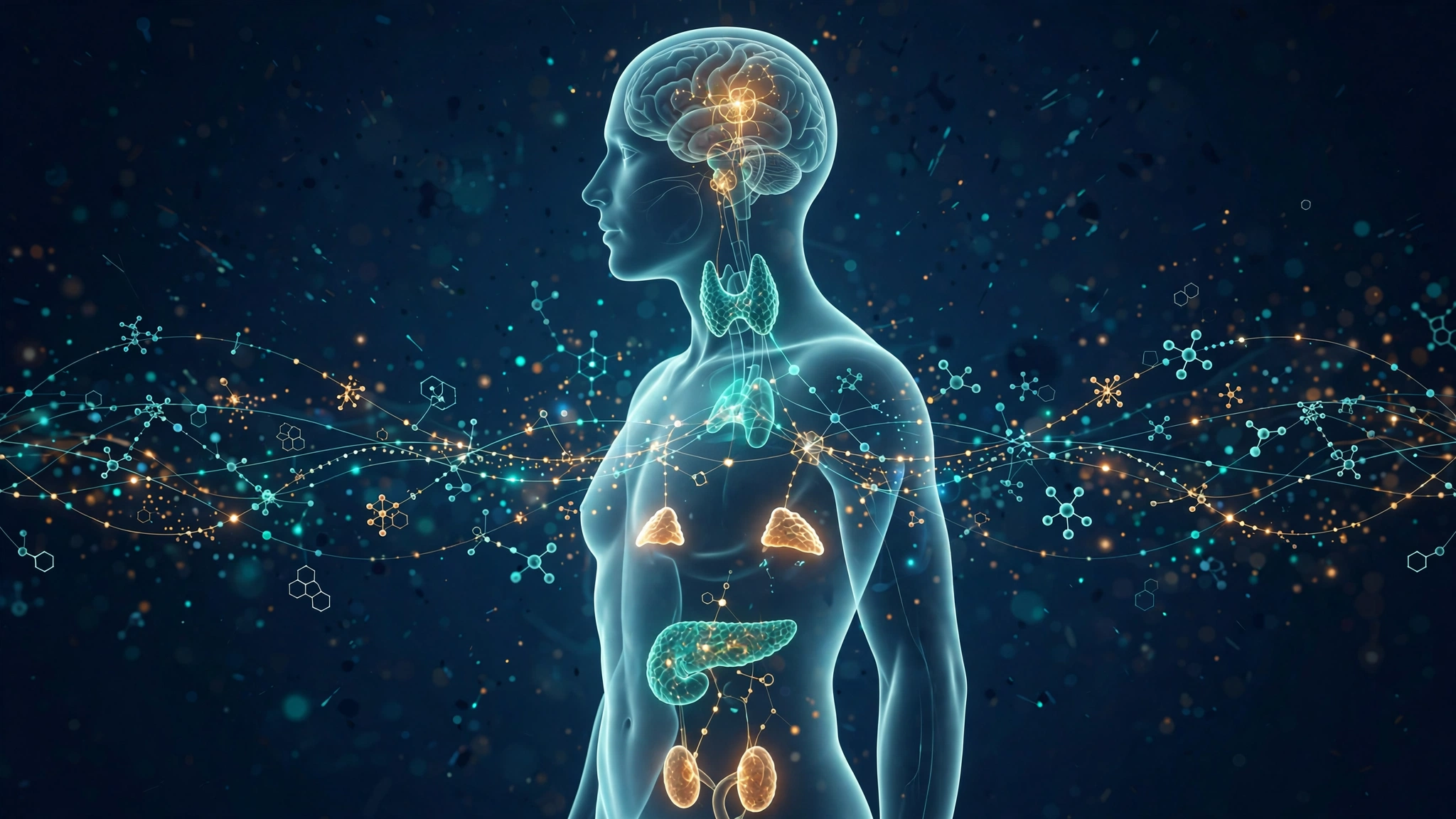
Iodine and thyroid research examines the relationship between dietary iodine, thyroid hormone production and lifelong health. For World Iodine Deficiency Day on October 21, this evidence review explains deficiency, excess, population testing, pregnancy and the limitations of supplementation claims.
Why iodine matters to thyroid research
Iodine is a micronutrient essential to normal thyroid hormone production, and its importance extends from metabolism to growth and neurological development. World Iodine Deficiency Day on October 21 provides a useful occasion to examine the science behind iodine status, dietary sources, public-health interventions and thyroid testing. The key research distinction is between preventing deficiency in populations and diagnosing or treating an individual thyroid disorder. A population may benefit from adequate iodine in the food supply without every person needing an iodine supplement. Conversely, some individuals with specific dietary patterns or clinical circumstances require careful assessment. This review explains the evidence and its limitations, including the risks of excessive intake. It is educational and does not recommend experimental compounds, unsupervised iodine dosing or self-diagnosis.
Iodine as an essential nutrient
Iodine is an essential trace element because the body uses it to make the thyroid hormones thyroxine and triiodothyronine. The nutrient is obtained from food, iodized salt and some supplements rather than produced by the body. Adequacy depends on life stage, dietary intake and physiological needs. The NIH Office of Dietary Supplements lists an adult recommended dietary allowance of 150 micrograms per day, with higher amounts during pregnancy and lactation. These figures are dietary reference values, not instructions to take a particular supplement. Researchers should distinguish intake from absorbed dose and from thyroid function. People with similar estimated intake may differ in food patterns and underlying thyroid conditions. Scientific communication should explain the importance of adequate intake without suggesting that more iodine necessarily produces better thyroid function.
Thyroid hormone synthesis and regulation
Thyroid hormone synthesis involves the uptake of iodide into thyroid cells and its incorporation into hormone precursors. The process is regulated by multiple biochemical steps and physiological feedback mechanisms. Iodine is necessary but not sufficient for normal thyroid function; other aspects of gland health and endocrine regulation also matter. Research may examine iodine transport, hormone synthesis or thyroid tissue responses in cells and animals, but those experiments do not directly establish clinical benefits of a consumer product. A mechanism can explain why deficiency matters without proving that high-dose supplementation improves outcomes in iodine-sufficient individuals. Researchers should report whether they measured biochemical pathways, circulating hormones or patient-centred outcomes. These are different levels of evidence and should not be presented as interchangeable.
The hypothalamic-pituitary-thyroid axis
The hypothalamic-pituitary-thyroid axis coordinates thyroid hormone production through regulatory feedback. Thyroid-stimulating hormone, or TSH, is commonly used in clinical assessment, while free thyroxine and other tests provide additional context. A change in TSH does not automatically identify dietary iodine deficiency because multiple thyroid disorders and physiological conditions can alter the result. The NIH notes that TSH may remain within a normal range despite low iodine intake, limiting its usefulness as a population iodine marker. Researchers need to distinguish endocrine function from nutritional exposure. Laboratory values must be interpreted with age, pregnancy status, medications and clinical history. A single test result cannot explain every symptom attributed online to a slow or fast metabolism.
Iodine deficiency and goiter
Severe iodine deficiency can reduce thyroid hormone production and contribute to enlargement of the thyroid gland, known as goiter. The effects depend on severity, duration and life stage. During pregnancy and early development, substantial deficiency can have serious consequences for growth and neurological development. In adults, iodine deficiency may affect thyroid function and well-being, but not every enlarged thyroid is caused by insufficient iodine. Researchers should examine the underlying cause rather than use goiter as a universal proxy for diet. Population studies may track thyroid size alongside urinary iodine measurements, while clinical evaluation requires individualized assessment. Public-health success in reducing deficiency does not eliminate the need to investigate thyroid conditions arising from other causes.
Global patterns of iodine nutrition
Iodine deficiency remains an important global public-health concern even though it is uncommon in Canada and the United States. Geographic differences in soil, food supply and fortification policies contribute to variation. Researchers should avoid assuming that national averages describe every subgroup. Pregnant people, individuals who avoid several iodine-rich food groups and communities with limited access to iodized salt may have different intake patterns. Cross-country comparisons also require consistent sampling and laboratory methods. A region’s historical deficiency status may change after fortification or dietary transitions. Good surveillance repeats measurements and reports uncertainty rather than treating a decades-old estimate as current. The relevant policy goal is adequate intake without creating unnecessary excess exposure.
Iodized salt as public-health policy
Iodizing salt is a widely used strategy for preventing iodine deficiency at the population level. Its effectiveness depends on coverage, iodine concentration, storage, distribution and how households obtain salt. A program can be well designed yet fail to reach groups who use noniodized products. Researchers should measure both the iodine content of salt and the nutritional status of the population. Fortification also interacts with efforts to reduce excessive sodium intake; adequate iodine should not be framed as a reason to consume more salt. Public-health strategies can maintain appropriate iodine supply while supporting sodium reduction. Evaluations should examine whether benefits reach pregnant people and other groups with increased requirements, and whether surveillance identifies unintended excessive intake.
Food sources and dietary variability
Fish, other seafood, dairy foods, eggs and iodized salt can contribute iodine to a diet, but the content varies. Animal feed, processing, agricultural conditions and food choices can influence measured amounts. Some processed foods contain salt that is not iodized, so sodium content is not a reliable indicator of iodine intake. Specialty salts may also lack added iodine unless the label states otherwise. Food-composition databases provide useful estimates but may not capture every regional or brand difference. Researchers should describe how intake was assessed and whether supplements were included. A varied diet can provide iodine, yet adequacy cannot be inferred from one meal photograph or a single ingredient. Dietary patterns and life-stage requirements need to be considered together.
Seaweed and highly variable iodine content
Seaweed is often described as an iodine-rich food, but its iodine concentration can vary dramatically by species and preparation. This variability makes blanket serving recommendations unreliable. Some products can provide far more iodine than expected, creating concern for excessive intake, especially in susceptible individuals. Researchers should measure actual iodine content rather than assume all seaweed has a standard concentration. Dietary questionnaires also need to distinguish occasional consumption from concentrated products and supplements. An ingredient being natural does not guarantee that its iodine dose is appropriate. Food labels may not provide complete information about variation. People with thyroid disorders or concerns about high iodine exposure should seek professional advice rather than use seaweed as an unsupervised treatment.
Vegan diets and iodine planning
People following vegan diets may consume little dairy, seafood or eggs, which are common iodine sources in many dietary patterns. This does not mean that a vegan diet is inherently deficient, but it makes deliberate planning important. Iodized salt and appropriately selected fortified foods or supplements may contribute, depending on individual needs. Researchers should measure actual dietary intake rather than classify every plant-based participant as having the same nutritional status. Some plant foods contain small and variable amounts of iodine. The NIH identifies people who avoid iodine-rich foods or iodized salt as groups that may have inadequate intake. Dietary advice should also consider sodium guidance and the risk of excessive iodine from concentrated seaweed products. Individual planning is preferable to simplistic dietary labels.
Pregnancy and fetal neurodevelopment
Pregnancy increases iodine requirements because maternal thyroid physiology changes and fetal development depends on adequate thyroid hormone availability. The NIH lists a recommended dietary allowance of 220 micrograms per day during pregnancy. Severe deficiency is associated with important developmental harms, but research on supplementation in settings of mild or moderate insufficiency is more complex. Trials have not consistently demonstrated improvements in all child neurodevelopmental outcomes. Observational studies can be confounded by diet, education, health and other factors. Professional organizations often recommend iodine-containing prenatal supplements, yet products vary in composition. Pregnant people should discuss appropriate intake and thyroid concerns with their healthcare professionals. Neither deficiency nor excess should be treated casually during this period.
Lactation and infant iodine supply
During breastfeeding, iodine supplied through breast milk helps meet an infant’s nutritional needs. Maternal iodine intake can influence breast-milk iodine concentration, although individual variation and measurement methods matter. The NIH lists a recommended dietary allowance of 290 micrograms per day during lactation. This value describes total dietary need, not an instruction to add that amount on top of ordinary food intake. Research should distinguish maternal dietary estimates from measured milk iodine and infant health outcomes. Formula-fed infants obtain iodine through appropriately formulated products, which raises different assessment questions. Clinicians can help families address dietary restrictions and thyroid conditions. High-dose iodine supplementation without medical guidance is not a reliable strategy for improving infant health.
Childhood growth and thyroid function
Thyroid hormones contribute to normal skeletal growth and neurological development, making adequate iodine particularly important during early life. Yet childhood development depends on many nutritional, medical and social factors. A low test score or delayed growth pattern cannot be attributed to iodine without appropriate evidence. Population studies may examine urinary iodine and developmental outcomes, but confounding can complicate interpretation. Researchers should use age-appropriate measures and consider prenatal exposures where relevant. Severe deficiency has well-established consequences, while the effects of marginal variation in iodine intake can be harder to isolate. Pediatric clinical concerns deserve professional evaluation rather than internet-based nutrient experimentation. Research summaries should avoid presenting iodine as a general intelligence or growth-enhancement product.
Adult thyroid disorders and iodine status
Hypothyroidism and hyperthyroidism have multiple causes, including autoimmune conditions and other thyroid disorders. Iodine status is one potential factor but does not explain every abnormal hormone result. Supplementing iodine in a person who already has adequate intake may be unhelpful or harmful. Researchers should distinguish nutritional deficiency from thyroid gland dysfunction and consider the effects of medication and prior treatment. Clinical studies may use TSH, free T4, antibodies and imaging according to the question. These tests do not all measure iodine nutrition directly. Symptoms such as fatigue, weight change or temperature intolerance are nonspecific and require clinical context. Responsible communication avoids implying that an iodine supplement is an appropriate universal response to thyroid-related symptoms.
Excess iodine and adverse effects
Excessive iodine intake can disrupt thyroid function and may contribute to either hypothyroidism or hyperthyroidism in susceptible individuals. The NIH lists an adult tolerable upper intake level of 1,100 micrograms per day from all sources, with different limits for younger age groups. An upper limit is not a target intake. It is also not a guarantee that every person below it is protected from all adverse effects. Some individuals with pre-existing thyroid conditions may respond differently to iodine exposure. Researchers should document food, supplements, medications and relevant contrast agents when studying high intake. Marketing that presents megadoses as inherently beneficial ignores the physiological balance required for normal thyroid regulation. Clinical advice should be individualized.
Autoimmune thyroid disease and susceptibility
Autoimmune thyroid conditions can influence how the gland responds to changes in iodine intake. Researchers need to distinguish people with established disease from participants without known thyroid disorders. A supplementation trial that excludes high-risk patients may not provide evidence of safety for those groups. Observational associations between iodine intake and thyroid antibodies can also be influenced by age, geography and other factors. Mechanistic studies may suggest pathways, but they do not establish the best clinical approach for an individual. People taking thyroid medication or living with autoimmune thyroid disease should discuss supplements with their healthcare team. More iodine is not a universal treatment, and abruptly changing intake may complicate disease management.
Urinary iodine as a population marker
Urinary iodine concentration is widely used in surveys because much of ingested iodine is excreted in urine. The median value from a sufficiently large, appropriately sampled population can help characterize iodine nutrition. Researchers should report the population, sample design, laboratory method and the criteria used for interpretation. Pregnancy has distinct population thresholds, so results should not be compared casually with those for school-aged children or nonpregnant adults. Spot urine samples are convenient but vary with hydration and recent intake. Repeated surveillance can identify trends after changes in diet or fortification. The method is valuable for public health precisely because it supports group-level assessment, not because it diagnoses every individual from one sample.
Limits of individual urine tests
A single spot urinary iodine result is generally not a reliable measure of an individual’s habitual iodine status. Concentrations fluctuate with recent meals, fluid intake and other factors. A person with an unusually high result after a seaweed meal may not have consistently high intake, while a low reading does not automatically establish persistent deficiency. Research can use repeated collections or other methods when individual-level questions require greater precision. Laboratory reports should specify units and collection protocols. Commercial interpretations that label one spot test as a definitive diagnosis can overstate the evidence. Clinicians evaluate thyroid symptoms and disease with a broader history and appropriate tests rather than treating population surveillance cutoffs as individual diagnostic thresholds.
TSH, free T4 and clinical interpretation
TSH and free T4 are important clinical tools for assessing thyroid function, but they answer different questions from urinary iodine. A person can have a normal TSH and still have an intake pattern that warrants dietary review, while an abnormal TSH may result from a cause unrelated to iodine deficiency. Reference intervals vary with age, pregnancy and laboratory methods. Researchers should avoid interpreting small changes without considering biological variation and clinical significance. A supplement study may report an effect on one hormone without demonstrating better health outcomes. Diagnostic decisions require professional assessment. The distinction between thyroid physiology, iodine exposure and clinical disease is essential for responsible interpretation of research.
Thyroglobulin in population research
Thyroglobulin is a protein involved in thyroid hormone synthesis and can be studied as a biomarker in iodine research. Population studies may examine it alongside urinary iodine and thyroid size, but interpretation depends on age, assay methods and thyroid conditions. It is not a stand-alone consumer test for deciding how much iodine to take. Researchers should specify whether they are investigating nutritional status or a different clinical use of the marker. Antibodies and other factors can affect measurement and interpretation. Changes in a biomarker may support a physiological hypothesis without proving that an intervention improves patient-centred outcomes. Good studies report analytical limitations and avoid treating every numerical shift as evidence of benefit.
Dietary assessment and food composition
Estimating iodine intake is challenging because food iodine concentrations can vary and not all nutrition databases contain detailed values. Researchers may use food-frequency questionnaires, recalls, household salt surveys or direct food analysis. Each approach has strengths and sources of error. Recall bias can affect dietary questionnaires, while a brief recall may not reflect usual intake. Supplements and seaweed products can contribute substantially and should be recorded separately. Household access to iodized salt does not establish the amount actually consumed by each member. Combining methods may improve understanding, but investigators should be transparent about uncertainty. Research conclusions are strongest when dietary estimates align with suitable population biomarkers and clearly defined outcomes.
Supplement trials and causal inference
Randomized supplementation trials can test whether changing iodine intake affects selected outcomes, but their relevance depends on baseline status. A trial in a severely deficient population may not generalize to people who already consume adequate iodine. Researchers should measure adherence, total intake and possible adverse effects. Outcomes may include biomarkers, thyroid function and child development, which require different follow-up periods. Blinding and placebo selection also matter. Studies during pregnancy need especially careful ethical design. Reviews of mild-to-moderate deficiency have found uncertainty about some neurodevelopmental benefits, so broad claims should be avoided. The appropriate scientific conclusion distinguishes established prevention of severe deficiency from questions that remain unresolved in specific populations.
Observational research and confounding
Observational studies of iodine and thyroid health face several sources of confounding. People with different diets may also differ in age, income, health conditions and supplement use. A diagnosed thyroid disorder can lead someone to change their iodine intake, creating reverse causation. Cross-sectional measurements cannot establish which came first. Longitudinal studies can improve temporal understanding but still require careful adjustment. Researchers should report effect sizes, uncertainty and the population studied rather than focus only on statistical significance. Ecological comparisons between regions are useful for surveillance but cannot automatically describe individual causal relationships. A balanced evidence review recognizes strong biological knowledge about iodine while remaining cautious about conclusions drawn from imperfect observational data.
Radioactive iodine and clinical distinctions
Radioactive iodine has specific diagnostic and therapeutic uses in nuclear medicine under professional supervision. This is different from ordinary dietary iodine and from potassium iodide used in particular radiation emergencies. These applications should not be conflated in public-facing nutrition content. A supplement purchased for thyroid wellness is not an appropriate substitute for medically indicated treatment or emergency instructions. Researchers studying radiological exposures must distinguish isotopes, dose, route and clinical context. Public-health authorities determine when protective measures are warranted. Unsupervised use of iodine products in response to radiation concerns can cause harm and may not provide the intended protection. Clear terminology prevents confusion between nutrition, endocrinology and specialized medical interventions.
Research priorities and evidence-based conclusions
Future iodine research should strengthen dietary surveillance, evaluate groups at risk of inadequate intake and improve methods for assessing status. Pregnancy, dietary transitions and changes in salt use deserve attention, but studies should avoid treating every subgroup as deficient without evidence. Laboratory standardization can make population comparisons more reliable. Intervention trials should report baseline iodine status, clinically meaningful outcomes and adverse effects. Public-health programs need to balance deficiency prevention with avoidance of excess. For individuals, appropriate nutrition and qualified thyroid care remain more important than marketing claims about iodine megadoses or experimental products. World Iodine Deficiency Day highlights a successful principle of public health: targeted prevention works best when grounded in measurement, proportionality and ongoing evaluation.
Frequently asked questions
Why does the thyroid need iodine?
Iodine is an essential component of thyroid hormones T4 and T3, which regulate many physiological processes.
Is iodine deficiency common in Canada?
Severe iodine deficiency is uncommon in Canada, although intake can vary by diet and life stage.
Can too much iodine harm the thyroid?
Yes. Excess intake can contribute to thyroid dysfunction, particularly in susceptible individuals.
Does one urine iodine test diagnose deficiency?
No. Spot urinary iodine is most useful for population surveillance rather than definitive individual diagnosis.
Are iodine requirements higher during pregnancy?
Yes. Pregnancy and lactation have higher recommended intakes; individual supplementation decisions should involve healthcare professionals.
Research references
NIH Office of Dietary Supplements: Iodine for Health Professionals; NIH: Iodine Consumer Fact Sheet; NIH ODS Iodine Initiative.
For laboratory research use only. Not for human consumption.